The practical answer.
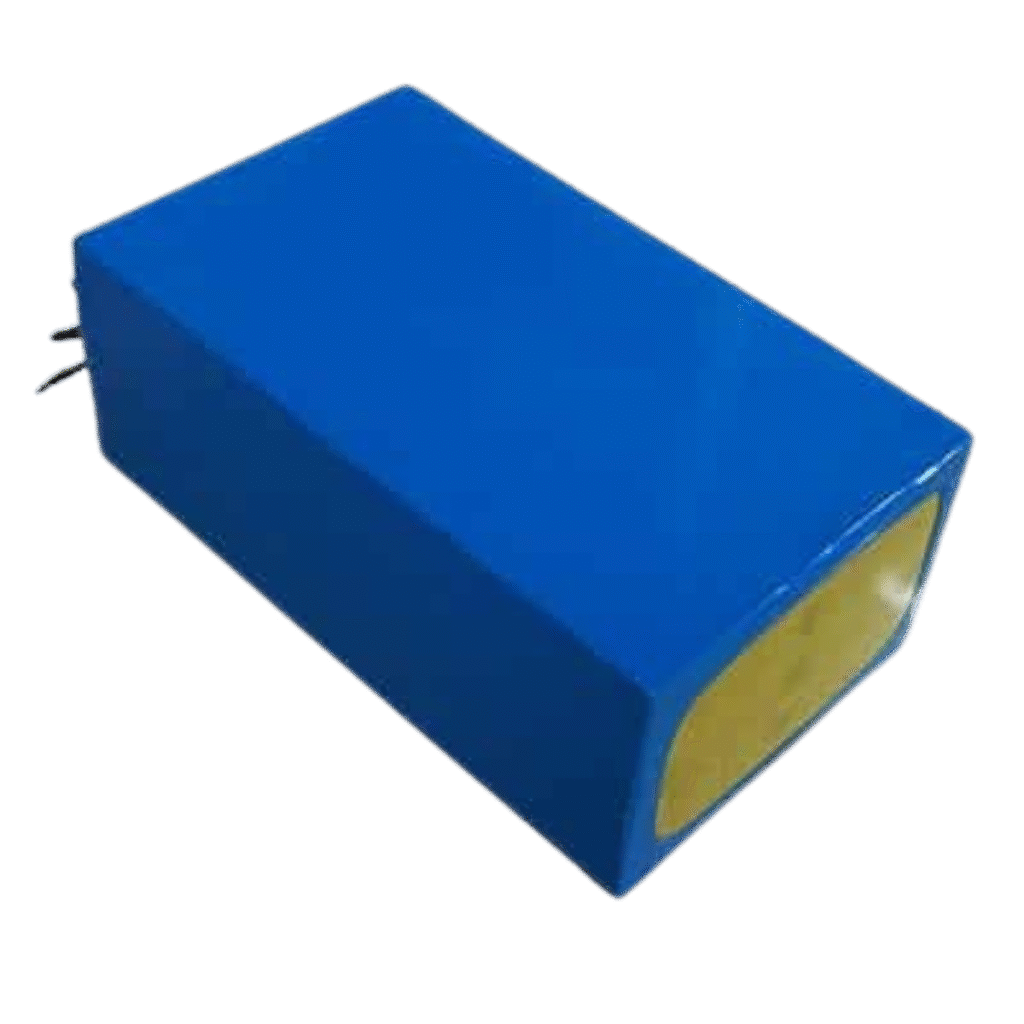
Specify golf-cart battery compatibility with a measured battery-side current envelope, including acceleration magnitude, duration, repetition and regenerative charging. Motor-controller headline current, nominal voltage and Ah capacity cannot replace that envelope. Match it to the actual battery, controller and installed vehicle under approved conditions, and have qualified vehicle personnel validate the interaction. No current or range example in this article is a Jetray product rating or a drop-in compatibility claim.
Identify which current the controller specification describes
A controller label can summarize a different electrical quantity from the current flowing at the battery terminals. In an electronically controlled drive, the motor-side waveform and the battery-side demand must be interpreted at their own measurement points. Record whether a stated rating is battery DC current, motor phase current, RMS current or another defined value. Also retain the rated duration and conditions. A number copied without those definitions cannot reliably serve as a battery requirement.
Curtis publishes model-specific motor-controller documentation with electrical and integration details. Use the actual installed controller's approved material rather than assuming that one manufacturer's example covers the cart. Record hardware identity, relevant software and settings under the vehicle specialist's control. The task is to establish what the battery will experience in this configuration, not to choose the biggest current number in a sales brochure or presume that changing controller settings is an acceptable conversion method.
Translate a measured peak into a complete requirement
A peak-current requirement needs magnitude, duration, repetition and the conditions that produced it. Explain the vehicle state, payload, relevant terrain conditions and battery operating state used in the approved engineering evaluation. A brief start event can be different from repeated starts or sustained demanding operation. Also record the measurement bandwidth, because a slowly sampled display may smooth the event that matters to a protection circuit.
A battery proposal should state the corresponding permitted envelope for the complete assembly. That includes the relevant connectors, conductors, protection path and installation conditions, not only a cell capability. Ask what changes at restrictive temperatures or battery states and what recovery behavior is approved after a limit is reached. Do not substitute an undocumented pulse label for an agreed duration, and do not increase a protection threshold merely because an initial vehicle test did not complete.
| Demand or state | Documented requirement | Evidence boundary |
|---|---|---|
| Acceleration | Magnitude, duration and repetition | Battery-side current trace |
| Repeated duty | Installed thermal and operating conditions | Complete pack and vehicle configuration |
| Lower operating voltage | Controller demand and permitted voltage window | Measured bus behavior |
| Regeneration | Charge allowance and restrictive-state response | Battery, drive and vehicle controls together |
| Recovery | Approved handling after an event | Released vehicle and service procedures |
Separate motor nameplate power from actual battery input
For a hypothetical electrical example, a drive consumes 2.7kW of DC power at the defined battery-side boundary. At 36V the arithmetic current is 75A; at 30V it is 90A, assuming the same DC input power. These are not ratings for a motor, controller or Jetray battery. They simply show why a current discussion should include the operating voltage and why a nominal voltage label is incomplete.
If the starting number instead describes motor mechanical output, the accounting is different because losses and operating behavior must be considered. In the actual cart, the controller may also limit demand rather than maintain constant power as voltage falls. Use measured traces and the responsible suppliers' specifications to resolve those questions. The example cannot justify any particular current limit, fuse choice, cable size or vehicle performance claim; those require the approved design and qualified review.
Use repetition to understand heating rather than just energy
Consider a hypothetical 60-second pattern with 100A for five seconds and 40A for the remaining 55 seconds. The arithmetic average is 45A. The RMS value is approximately 48A, calculated from the square root of [(100² × 5 + 40² × 55) / 60]. For a hypothetical constant resistance, resistive heating follows the mean squared current rather than the simple average. The example is not a recommended cart duty cycle.
Real cells, connectors and protection devices have changing resistance, thermal mass and cooling conditions. The RMS calculation is therefore a screening explanation, not a complete thermal rating or validation result. Ask the vehicle and battery teams how repetitive events are represented in the proposed evidence. A sample that tolerates one short event from a cool start has not thereby demonstrated a repeated-duty capability in the installed battery compartment.
Evaluate regenerative current as a separate charge condition
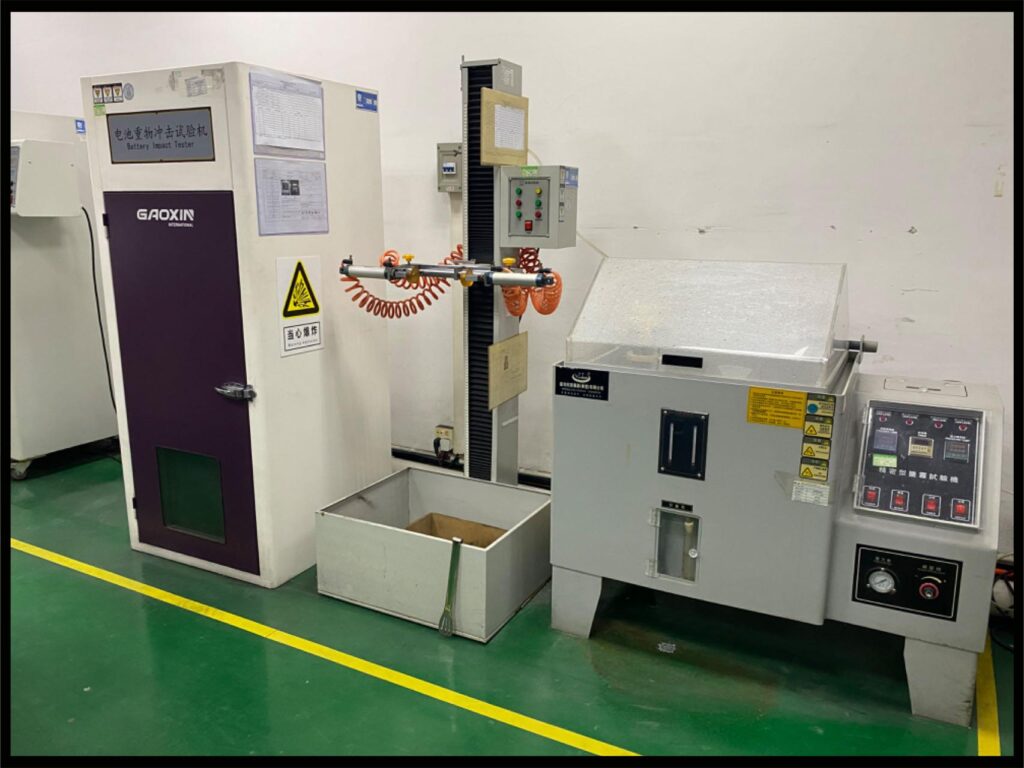
A cart that returns energy through its drive system presents a charging condition to the battery. Charge acceptance can differ from discharge capability, especially when the battery is near its permitted charging boundary or another restrictive state. The actual supplier must define the allowance and the control interface. A large discharge rating must not be interpreted as unconditional permission for current to flow back through the same terminals.
Curtis's referenced legacy controller manual documents model-specific regenerative overvoltage behavior, illustrating why the actual controller's response needs review. TI also explains how regeneration can raise a motor system's supply voltage. Those references are technical examples, not claims that the linked controllers are installed in a particular cart. The responsible vehicle team must assess the full outcome if battery charge acceptance is reduced or removed, including the approved motion and recovery behavior.
Distinguish a small energy figure from a demanding event
For a hypothetical physics example, 650kg moving at 6m/s has kinetic energy of 0.5 × 650 × 6², or 11,700J, approximately 3.25Wh. A separate hypothetical 10m decrease in height corresponds to about 17.7Wh of gravitational potential energy using 9.81m/s². Neither value predicts recovered battery energy, stopping distance or braking performance. Actual energy is distributed among electrical recovery, friction and other losses according to the vehicle.
These modest Wh values do not establish that every battery state can accept the resulting current or that the DC bus will stay within its approved voltage range. Power and event timing remain separate questions. Use a qualified team's approved evaluation plan for the actual vehicle. This article does not direct users to conduct downhill tests, provoke overvoltage, bypass the BMS or rely on regenerative behavior outside the vehicle manufacturer's instructions.
Build a current-and-state acceptance record
An acceptance record should connect the current trace with the battery identity, controller configuration, installed harness and relevant vehicle conditions. Preserve current direction and sensor location in the plot legend. Align current, bus voltage and available controller or battery status against one timebase. If the equipment cannot resolve the sequence of events, state that limitation rather than confidently assigning the cause of a trip from a slow event log.
Define the pass criteria before the evaluation. The criteria should be set by the responsible vehicle and battery teams and should cover the relevant current directions, operating windows and required responses. Record failures and unresolved dependencies as well as successful runs. A demonstration that the cart moves once is not evidence for the complete current envelope, and a restart after a fault does not establish that the underlying integration problem was resolved.
Where the approved evaluation permits it, compare voltage at the battery terminals with voltage at the controller supply boundary during the same event. That comparison can help the responsible team distinguish source behavior from an installation-path drop. Preserve the probe locations, instrument range and calibration information, because a trace without a known reference point may answer a different question from the one purchasing intended. This is a measurement-planning consideration for qualified personnel, not a direction to alter live vehicle wiring.
Ask for the correct Jetray reference and its missing evidence
The published 36V 100Ah golf-cart reference can start a product discussion, while the 36V LiFePO4 entry is an application evaluation and the 48V-class entry is a vehicle-specific system inquiry. They do not form an approved interchangeable set. Request the current model specification and documented current envelope for the actual proposal. This site deliberately does not turn incomplete source current fields into confirmed traction ratings.
Provide the cart model, controller details, approved installation information and measured acceleration and reverse-current traces with the inquiry. Ask which requirements can be met by an existing documented assembly and which require further engineering work. Keep installation approval, electrical capability, charge compatibility and commercial terms separate. A clear current review lets the parties resolve a concrete integration question without inventing Jetray customer cases, range promises or universal conversion suitability.
Frequently asked questions
Can I size the battery using the motor's rated power alone?
No. Mechanical output, battery input and transient current are different quantities. The vehicle's controller and operating conditions influence the actual battery demand. Obtain a measured battery-side profile and the approved controller information, then compare it with the complete pack's permitted operating envelope.
Does a larger Ah value prevent an acceleration-related trip?
Not necessarily. Ah describes a charge-capacity quantity, while a trip can relate to current, voltage, temperature, wiring or control behavior. Diagnose the actual event using appropriate evidence. A capacity increase cannot be assumed to correct an unidentified protection or interface issue.
Can the old controller always remain unchanged after conversion?
That must be reviewed for the exact vehicle, battery and charger configuration. The operating window, current controls, regeneration and status interfaces may need a documented assessment. This article does not authorize a setting change or assert compatibility, and a catalogue application label cannot make that decision.
Sources & further reading
- Curtis 1232E AC induction motor controller datasheet, Rev. F ↗
- Curtis 1223/33, 1225/35, 1227/37 controller manual, Rev. D: regenerative overvoltage behavior ↗
- TI SSZT878: regenerative motor current and supply-voltage overshoot ↗
- Jetray original product and application navigation ↗
Prepared from primary technical sources and original engineering analysis. All numerical scenarios are hypothetical planning examples, not Jetray measurements, customer cases or verified product ratings. Catalogue links are evaluation references; exact application suitability and approval require documented project validation.
Prepared for the golf cart battery projects collection. General engineering guidance does not replace a model-specific datasheet or application validation. Source review: 5 November 2026.